
Freedom Camping in New Zealand (Rules, Tips & South Island Guide)
What freedom camping means in NZ, where rules apply, and how to do it responsibly. Rules vary by region, always check signage and council or DOC information. Here’s a practical guide.
Quick answers
Is freedom camping allowed?
Yes, in designated areas. Restrictions apply, some places allow only self-contained vehicles or have time limits. Always check local rules.
Do you need self-contained?
Often, for freedom camping areas. It depends where you are. Many councils require certified self-contained vehicles in designated spots.
Best alternative?
DOC campsites and holiday parks. They’re easy to plan for, have clear rules, and facilities vary from basic to full-service.
Biggest mistake?
Ignoring signage or leaving rubbish. Always camp only where permitted and leave no trace. Check council and DOC info.
Best regions?
Many freedom camping South Island and North Island regions have designated areas. Rules differ by council; popular road trip regions often have a mix of freedom camping, DOC camps, and holiday parks.
What is freedom camping?
Freedom camping in New Zealand means camping on public land in areas where overnight camping is permitted, often by a local council or the Department of Conservation (DOC). It is not “camp anywhere”: it’s only allowed in designated spots, and rules are location-specific.
It’s useful to distinguish:
- Freedom camping areas ; Council or DOC land where camping is permitted, often with conditions (e.g. self-contained only, max nights). Rules vary by region.
- DOC campsites ; Managed camps with a fee; facilities range from basic to serviced. Clear rules and good for planning.
- Holiday parks / paid campgrounds ; Private or council-run; usually full facilities, higher cost.
Always check the rules for the specific place you plan to stay. Councils and DOC publish bylaws and maps online.
The rules you need to know
Signage is the law on the ground
What you see on site, signs saying “no camping”, “self-contained only”, or “max 2 nights”, reflects local bylaws. Ignoring signage can result in fines. If in doubt, don’t camp there; use a DOC camp or holiday park instead.
Self-contained rules and enforcement
In many areas, only certified self-contained vehicles are allowed in freedom camping zones. Certification means a fixed toilet and wastewater storage meeting the NZ standard. Councils and DOC enforce these rules; non-compliance can lead to fines. Check whether your vehicle and setup meet the requirements for each area.
Time limits
Many freedom camping areas have a maximum stay (e.g. one or two nights). Time limits vary by site and council. Respect them and move on.
Fires and cooking
Open fires are often restricted or banned, especially in summer. Use only designated cooking facilities or portable stoves where permitted. Check local rules and fire bans.
Toilets and waste disposal
Use public toilets and dump stations where provided. If you’re in a self-contained vehicle, use your onboard facilities and dispose of waste at approved dump stations. Never dump waste in the environment. Leave no trace.
Respect locals and private land
Freedom camping is only on designated public land. Never camp on private property without permission. Keep noise down, respect other campers and residents, and leave the place as you found it.
Freedom camping vs DOC camps
Understanding the difference helps you plan. Freedom camping vs DOC camps:
Freedom camping
Permitted only in designated areas. Often limited (e.g. self-contained only, time limits). Rules vary by council and region. Good when you meet the conditions and follow the rules.
DOC camps
Affordable, scenic, and easier to plan. You pay a fee; facilities vary from basic to serviced. Clear rules and locations. Popular for road trippers. See South Island road trip itinerary for route ideas.
Holiday parks
Most facilities (power, showers, kitchens). Higher cost. No ambiguity about where you can stay, book and go.
Can you freedom camp with a rooftop tent?
Rooftop tent travel is a great way to explore New Zealand, but whether you can freedom camp in one depends on the rules for each location. In areas that allow non-self-contained camping, a rooftop tent is often fine. Where only certified self-contained vehicles are permitted, you need a vehicle that meets that standard (fixed toilet and wastewater storage).
When in doubt, use DOC campsites and holiday parks, they have clear rules and facilities, and you can plan your trip without guessing. Emphasise responsible behaviour: only camp where it’s allowed, leave no trace, and always check signage and council or DOC information before you stay.
Practical tips for freedom camping
- • Arrive early ; Popular spots fill up; have a backup campsite in mind.
- • Always have a backup ; DOC camp or holiday park nearby if the freedom site is full or closed.
- • Use public toilets and facilities ; Don’t rely on the bush; use designated facilities and dump stations.
- • Leave no trace ; Take all rubbish, minimise impact, respect the environment.
- • Check weather and wind ; Especially on the coast; pack for changeable conditions.
- • Pack layers ; Nights can be cold; bring warm sleep gear.
South Island trip planning with camping
Planning a freedom camping South Island or DOC-based road trip? Use our guides to plan your route and overnight stops:
- Best South Island road trip route ; Route options and planning.
- 7-day South Island itinerary ; One-week highlights.
- 10-day South Island road trip ; Full loop with buffer days.
- South Island road trip itinerary ; Full guide and must-stops.
Freedom Camping Map (South Island)
Sample DOC campsites, council-designated freedom camping areas, and dump stations. Always check current rules and signage before you stay.
Freedom Camping Map South Island
This map shows freedom camping locations across New Zealand’s South Island, including DOC campsites, council-approved areas, and dump stations.
Freedom camping rules vary by region, so always check the local council bylaws before staying overnight.
Use this map as a starting point for planning; confirm current rules, time limits, and self-containment requirements with the Department of Conservation and the relevant council for each area.
Map data © Mapbox. Locations are indicative; confirm with DOC and local councils.
Campervan vs rooftop tent for NZ camping
Choosing between a campervan and a car with a rooftop tent? Both work for NZ camping, freedom camping, DOC camps, and holiday parks. A rooftop tent setup is often cheaper and easier to drive and park; a campervan gives you indoor space. For a full comparison, see our campervan vs rooftop tent guide.
Why a Jimny is great for camping road trips
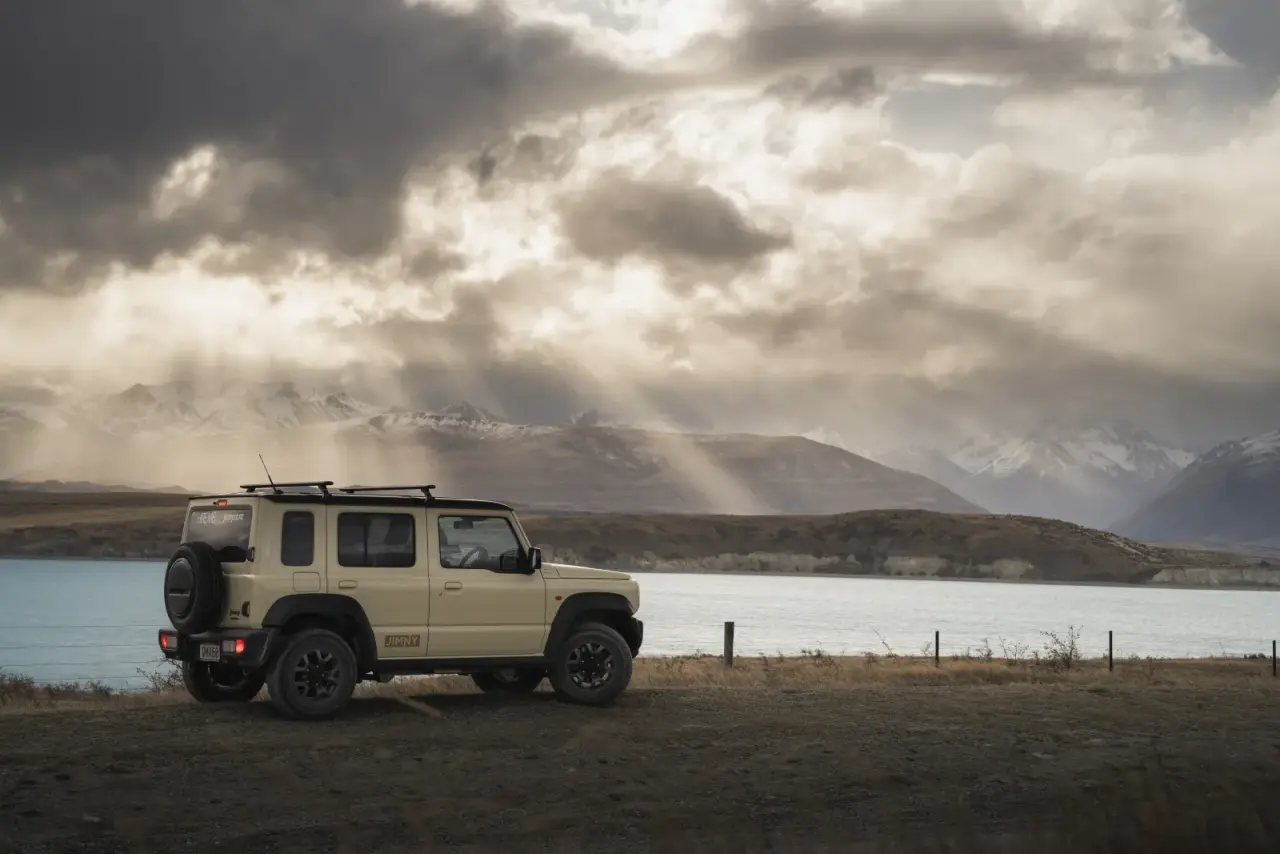
A compact 4WD like a Jimny is easy to drive and park, fuel-efficient, and well suited to scenic and gravel roads (public roads only; off-road is not allowed). Add a rooftop tent and you have a flexible camping setup for DOC camps and holiday parks, and for freedom camping where your setup meets the local rules.
See our vehicles and camping setup.
Hear it from the source: local council freedom camping rules
Official council and DOC links for maps, bylaws, and conditions. Use these before you stay.
National
New Zealand Government
National
Overview of freedom camping and why council rules vary.
Department of Conservation (DOC)
National
Rules for public conservation land and DOC guidance.
Canterbury
Christchurch City Council
Canterbury
Bylaw hub + where you can camp / maps.
Selwyn District Council
Canterbury
Freedom camping info for Selwyn district.
Waimakariri District Council
Canterbury
Camping info + freedom camping brochure.
Hurunui District Council
Canterbury
Responsible freedom camping info + requirements.
Kaikōura District Council
Canterbury
Responsible camping rules and enforcement info.
Ashburton District Council
Canterbury
Freedom camping guidance and expectations.
Mackenzie District Council
Canterbury
Responsible freedom camping bylaw info.
Marlborough / Nelson / Tasman
Marlborough District Council
Marlborough
Official map of prohibited freedom camping areas.
Nelson City Council
Nelson
Responsible camping rules in council-controlled places.
Tasman District Council
Tasman
Responsible camping bylaw info and documents.
Otago
Waitaki District Council
Otago
Freedom camping rules and bylaw links.
Dunedin City Council
Otago
Freedom camping rules and council guidance.
Queenstown Lakes District Council
Otago
Responsible camping rules + official camping map.
Central Otago District Council
Otago
Freedom camping information and local bylaw rules for the Central Otago region, including Cromwell and Alexandra.
Southland
Southland District Council
Southland
"Need to know" basics + links for specific sites.
West Coast
Grey District Council
West Coast
Freedom camping info + bylaw resources.
Westland District Council
West Coast
Campgrounds + responsible camping information.
Buller District Council
West Coast
Freedom camping rules + where you can camp.
Rules change and can vary by exact location. Always check signage and the council page before staying.
Frequently asked questions
- What is freedom camping in New Zealand?
- Freedom camping in New Zealand means camping on public land (often council or DOC land) in designated areas where overnight camping is permitted, sometimes for free or at low cost. It is not “camp anywhere”, rules vary by region, and many areas require a certified self-contained vehicle or have time limits and other conditions. Always check local signage and council or DOC information.
- Is freedom camping legal in NZ?
- Yes, in designated freedom camping areas. It is legal only where it is explicitly permitted by the local council or DOC. Many areas ban freedom camping or restrict it to self-contained vehicles. Ignoring signage or camping where it’s prohibited can result in fines. Always check the rules for the specific place you plan to stay.
- Do I need a self-contained vehicle for freedom camping?
- In many freedom camping areas, yes, only certified self-contained vehicles are allowed. Self-contained means the vehicle has a fixed toilet and wastewater storage that meets the NZ standard. In other areas, non-self-contained camping may be permitted. Rules vary by council and site; check signage and official council or DOC websites before you camp.
- Can you freedom camp in the South Island?
- Yes, in designated areas. The South Island has many freedom camping spots, but rules differ by region and site. Some areas allow only self-contained vehicles; others have time limits or are closed in certain seasons. Always check local council and DOC rules and follow signage. DOC camps and holiday parks are reliable alternatives.
- Can you freedom camp in a rooftop tent?
- It depends on the location. In freedom camping areas that allow non-self-contained camping, a rooftop tent is often fine. Where only self-contained vehicles are permitted, you need a certified self-contained setup (fixed toilet and greywater storage). When in doubt, use DOC campsites or holiday parks, which have clear rules and facilities.
- What's the difference between freedom camping and DOC camping?
- Freedom camping is usually in council or DOC-designated areas where overnight camping is permitted, often with few or no facilities, and rules vary by place. DOC campsites are managed by the Department of Conservation: you pay a fee (often low), and facilities range from basic to serviced. DOC camps are easier to plan for and are a popular alternative to freedom camping.
- Are there fines for freedom camping?
- Yes. Camping where it’s prohibited, ignoring signage, or not meeting local rules (e.g. self-containment where required) can result in fines. Councils and DOC enforce these rules. Always camp only in permitted areas and follow the conditions for that site.
- Where do you shower when road tripping?
- Holiday parks and many campgrounds have shower blocks. Some DOC camps have basic facilities; others are minimal. Plan stops at holiday parks or use public facilities in towns. If you’re freedom camping or using basic DOC sites, factor in stops where showers are available.
- Can you camp on beaches?
- Only where it’s explicitly allowed. Many beaches and coastal areas do not allow freedom camping, or allow it only for self-contained vehicles. Rules vary by council. Always check signage and council websites, never assume you can camp on a beach.
- Is it safe to camp in New Zealand?
- Generally yes. New Zealand is a popular destination for camping and road trips. Use common sense: lock your vehicle, don’t leave valuables visible, and choose well-used, designated sites. Check weather and road conditions, especially in winter or in remote areas.
- What's the best time of year for camping?
- The peak travel season (December–April) offers long days and warmer nights, with March and April often offering great weather and fewer crowds. Autumn and spring often have good weather and fewer crowds. Winter is possible but colder; some roads and sites may be affected by snow or weather. Always check conditions and pack accordingly.
- Do I need to book campsites?
- For freedom camping in permitted areas, booking usually isn’t required but spaces can fill up, arrive early and have a backup. For popular DOC camps and holiday parks, especially in peak season (December–April), booking ahead is recommended. Check DOC and holiday park websites for each region.
- Can I freedom camp in a rental vehicle?
- Yes, if the vehicle meets the rules for that area (e.g. certified self-contained where required) and your rental agreement allows it. Many rental companies permit freedom camping in designated areas; some require you to use only certified self-contained vehicles in freedom camping zones. Check your rental terms and the local rules.
- What does “self-contained” mean?
- A self-contained vehicle has a fixed toilet and adequate wastewater storage that meets the New Zealand standard (NZS 5465). It is certified with a warrant or sticker. In many freedom camping areas, only vehicles with this certification are allowed, to protect the environment and manage waste properly.
- Where can I find freedom camping rules for each region?
- Check the local council website for the area you’re visiting, each council publishes its freedom camping bylaws and maps. DOC also provides information on conservation land and campsites. Always confirm with official sources; rules and maps are updated from time to time.
Related guides
South Island road trip itinerary
Full route, 7- and 10-day plans, must-stops.
Best South Island road trip route
Route options and planning tips.
7-day South Island itinerary
One-week highlights route.
10-day South Island road trip
Full loop with buffer days.
Campervan vs rooftop tent
Compare options for your NZ road trip.
Ready to explore with a camping setup?
Book a compact 4WD with a rooftop tent and hit the road. DOC camps, holiday parks, and responsible freedom camping where the rules allow.