
Campervan vs Rooftop Tent in New Zealand
Choosing between a campervan and a car with a rooftop tent? Here is a straight comparison: costs, driving on NZ roads, parking, camping, and who each option suits.
Quick answer: which is better for who?
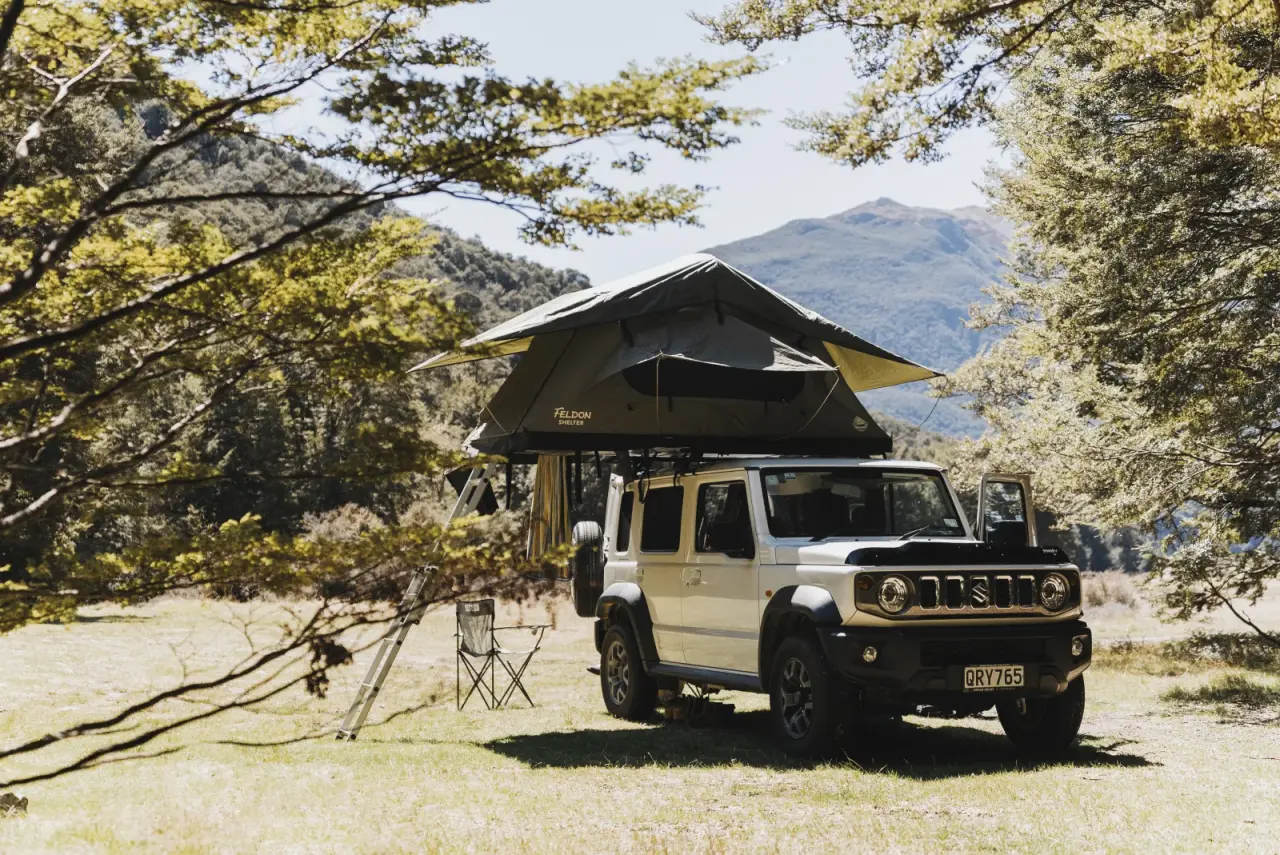
A campervan suits you if you want a bed and kitchen under one roof, prefer to cook and sit inside in any weather, or are travelling with kids. A car with a rooftop tent (like a Suzuki Jimny) suits you if you want camping without the size and cost of a van, prefer something easy to drive and park, and are happy with a quick tent setup and using holiday park or DOC facilities. For more on that choice, see campervan or car for a NZ road trip and campervan vs 4WD in NZ. If you are curious why some people switch from a van to a rooftop tent, why we chose a rooftop tent in NZ is a practical first-person take. For options in one place, campervan alternatives in New Zealand sums them up.
Cost comparison
We are not giving exact prices because they change with season and availability. Think in categories. Campervans typically sit in a higher daily rate band (often well above budget car hire), use more fuel, and can attract higher campsite or ferry fees because of size. Car plus rooftop tent usually has a lower daily rate and much better fuel economy. Over a week or two, the total can be noticeably lower and you still get to camp at DOC and holiday parks. If you are weighing cost alone, a campervan alternative like a small 4WD with a rooftop tent often wins for couples or two friends.
| Campervan | Rooftop tent (e.g. Jimny) | |
|---|---|---|
| Daily rate | Higher bracket | Lower bracket |
| Fuel | Heavier use | Lighter use |
| Campsite / ferry | Sometimes higher for length | Car-sized |
Check rental and ferry sites for current rates.
Driving experience on NZ roads
New Zealand roads are often winding, narrow, and sometimes unsealed. Wind can push a high-sided campervan around more than a low-profile car. Narrow sections and single-lane bridges feel less stressful in something car-sized. Gravel roads to DOC camps or scenic spots are fine in a normal car at a sensible speed; a compact 4WD handles them well. Rental terms generally allow gravel public roads but not off-road. If you want more on how a van compares to a 4WD on these roads, campervan vs 4WD in New Zealand goes into it. Driving a big van through the hills to Queenstown or Wanaka is doable but many people find a smaller vehicle more relaxing.
Parking and getting around towns
Town centres and car parks are built for cars. A campervan often means hunting for a long bay or parking further out. A car or small 4WD fits in standard spaces, so you can stop for coffee, groceries, or a look around without the hassle. In places like Queenstown or Wanaka, that difference is real. If you like to nip into towns and out again, a rooftop tent on a compact vehicle makes getting around easier. For a deeper take on this, why we chose a rooftop tent touches on parking and daily use.
Camping experience: comfort vs freedom
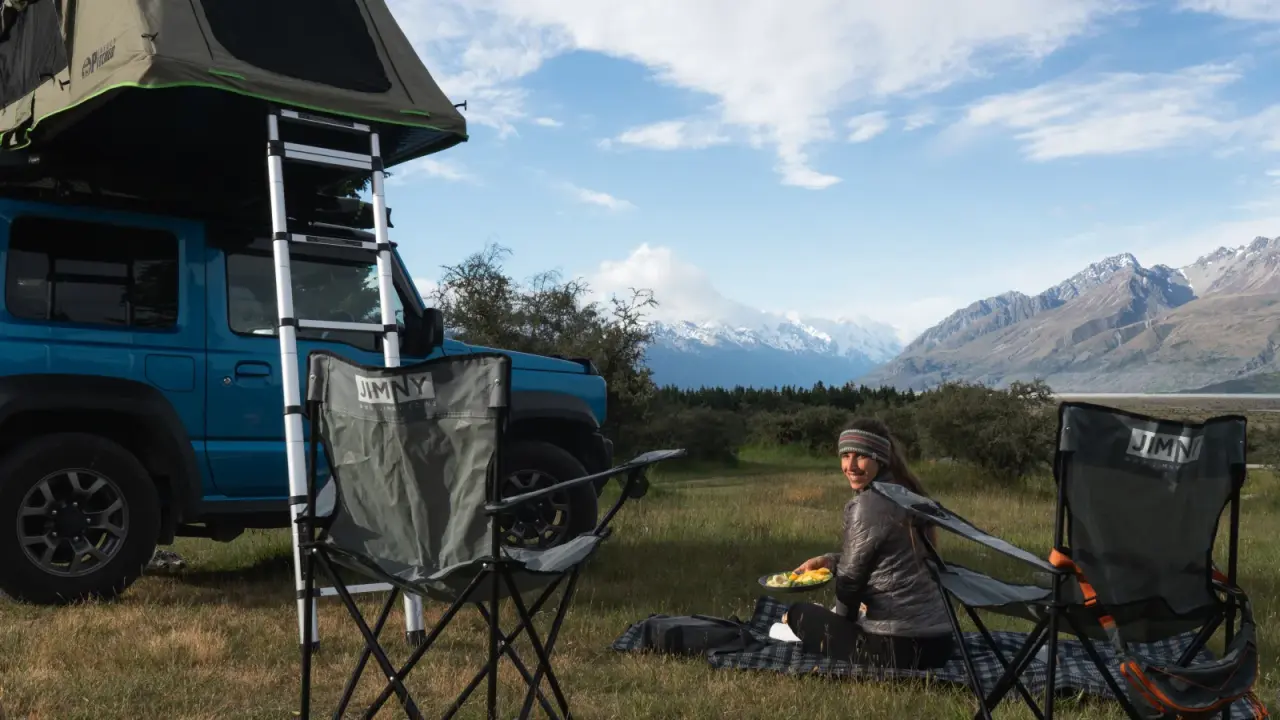
A campervan gives you a fixed bed and usually a kitchen. You can sit inside when it rains. The trade-off is size and cost. A rooftop tent gives you a proper mattress off the ground, setup in a few minutes, and no poles. You do not get an indoor living room. You do get more freedom to move each day, use any DOC or holiday park, and keep the vehicle small. So it is comfort and space (van) versus simplicity and agility (car + tent). Both let you camp in great spots; the vibe is different. Our camping setup page shows what is included with a Jimny rooftop tent hire.
Freedom camping and campground reality
Freedom camping in NZ is allowed only where councils permit it. Some areas require a certified self-contained vehicle; others allow non-self-contained in designated spots. Rules and signs vary by region. DOC campsites and holiday parks have their own rules and facilities. Many DOC sites have basic toilets; holiday parks have showers and kitchens. The reality is you need to check each place and follow the rules. Neither a campervan nor a rooftop tent changes that. For the full picture, see our freedom camping guide and FAQ.
Weather: winter vs summer
Summer is warm and busy. Shoulder season (March, April, September, October) often has good weather and fewer crowds. In winter, expect cold nights. Rooftop tents are fine with a good sleeping bag and insulated mat; pick sheltered spots and check road conditions. Some alpine roads need chains. A campervan gives you an indoor space to warm up, but you still need to drive carefully. Pack layers and wet-weather gear either way. For winter-specific tips, our winter camping page has practical advice.
Who should still hire a campervan?
If you want a kitchen and living space inside, dislike the idea of climbing into a tent at night, or are travelling with young kids, a campervan can be the right call. If you prefer to stick to main routes and bigger towns and do not mind the extra size and fuel cost, a van is a valid choice. We are not saying one is always better. We are saying that for many couples or pairs of friends, a campervan alternative like a small 4WD with a rooftop tent is a strong option. If you are still deciding between a van and a car for the trip, campervan or car for a New Zealand road trip breaks it down.
Why a Jimny with rooftop tent is a strong alternative
A Suzuki Jimny is compact, so it drives and parks like a normal car. It handles winding and gravel roads well. With a rooftop tent on top, you get camping without the bulk of a campervan and without the fuel bill. You can still use DOC camps, holiday parks, and designated freedom camping where allowed. It suits two people well. If that sounds like what you want, have a look at our vehicles and camping pages, or check availability.
Suggested 7-day South Island sample loop
One way to do a week: Christchurch to Lake Tekapo (stay near the lake or at a DOC camp), then to Aoraki/Mt Cook or Twizel, then Wanaka, then Queenstown. From Queenstown you can do a day trip to Glenorchy or Arrowtown, or head to Te Anau and Milford Sound if you have time. Loop back via the Crown Range or Cromwell. For more structure, use our South Island road trip planner and the 7-day South Island itinerary. This is only a sketch; adjust to your pace and must-sees.
Frequently asked questions
- Is a campervan worth it in New Zealand?
- It depends. If you want indoor living space, a built-in kitchen, or you are travelling with kids, a campervan can be worth it. For couples or solo travellers who are happy with quick tent setup and using holiday park facilities, a car with a rooftop tent is often cheaper and easier to drive and park.
- Is it cheaper to rent a campervan or a car with a rooftop tent in NZ?
- A car or compact 4WD with a rooftop tent is usually cheaper. Campervan daily rates are often in a higher bracket and fuel use is much higher. You still get to camp at DOC sites and holiday parks, so total trip cost can be a lot lower.
- Do you need a self-contained vehicle to camp in New Zealand?
- Only in some freedom camping areas. Many DOC campsites and holiday parks have toilets and showers, so self-containment is not required. Always check the rules at each site. If the area says self-contained only, your vehicle must be certified.
- Can you sleep in a rooftop tent anywhere in NZ?
- No. You have to camp where it is allowed: DOC campsites, holiday parks, and designated freedom camping spots. Rules vary by region. Check signs and council websites. Never freedom camp where it is prohibited.
- Is a rooftop tent okay in wind and rain?
- Good quality rooftop tents handle typical wind and rain when set up and pegged properly. In heavy weather, pick a sheltered spot or book a night in accommodation. Follow the rental company and manufacturer advice.
- How long does a rooftop tent take to set up?
- Most open in a few minutes. You unfold the tent, secure the ladder, and you are done. Packing up is quick too, so you can leave early and still have a full day on the road.
- Do I need a 4WD for a South Island road trip?
- No. The main tourist routes are sealed and fine in a 2WD. A 4WD is handy if you want to use gravel access roads or feel more confident in changeable conditions. Rental terms allow gravel public roads but not off-road use.
- Where do you shower when road tripping with a rooftop tent?
- Holiday parks and many campgrounds have shower blocks. Some DOC camps have basic facilities. Plan a stop at a holiday park every few days or use public facilities in towns. It works fine with a bit of planning.
- Is rooftop tent camping okay in winter in NZ?
- Yes, with the right gear. Use a good sleeping bag and insulated mat. Pick sheltered spots and check road conditions. Snow chains may be required on some alpine routes in winter.
Related reads
Campervan or car for a NZ road trip?
Pros, cons, hidden costs, and why a small 4WD with rooftop tent can be the middle ground.
Campervan vs 4WD in New Zealand
Road types, gravel, wind, and who should pick what.
Why we chose a rooftop tent in NZ
First-person take on switching from a van to a rooftop tent.
Campervan alternative in New Zealand
Options compared and why a Jimny with rooftop tent fits two people well.
South Island road trip planner · Camping · Vehicles · FAQ · Contact
Ready to try a Jimny with rooftop tent?
Compact, easy to park, and still a proper camping setup. Pick up from Christchurch or Queenstown and explore the South Island.