
Campervan or Car for a New Zealand Road Trip?
Not sure whether to hire a campervan or a car? Here is a quick decision guide, real pros and cons, and the hidden costs and hassles people often miss.
The big question is whether you want a moving bedroom and kitchen (campervan) or something smaller that you camp with (car plus rooftop tent or accommodation). For a full campervan vs rooftop tent in New Zealand comparison, we have a whole guide. This page is a shorter take: quick decision guide, pros and cons, and why a small 4WD with a rooftop tent often hits the sweet spot for couples or two friends.
Quick decision guide
Choose a campervan if you want to cook and sleep inside, do not mind a bigger vehicle, and are okay with higher fuel and often higher daily rates. Choose a car (or car plus rooftop tent) if you want to drive and park easily, keep costs down, and are happy to use holiday parks and DOC camps for facilities. If you are also weighing a 4WD versus a van, campervan vs 4WD in NZ is worth a read. If you want to see all options in one place, campervan alternatives in New Zealand compares car, station wagon, SUV, and rooftop tent setups.
Real pros and cons
Campervan
Pros: bed and kitchen on board, shelter in any weather, no tent setup.
Cons: bigger to drive and park, higher fuel use, often higher hire and campsite costs.
Car (or car + rooftop tent)
Pros: easy driving and parking, lower cost, fits normal car spaces.
Cons: no indoor kitchen or living space; you use campsite facilities or cook outside.
Hidden costs and hassles people do not expect
With a campervan, factor in extra fuel over the trip, ferry costs if you cross Cook Strait (often length-based), and sometimes higher or limited campsite options for long vehicles. Parking in towns can eat time; you may end up paying for a bigger bay or walking further. With a car, you give up the built-in kitchen and indoor space, so you will use holiday park kitchens or a portable stove and plan where to shower. Neither is a deal-breaker, but it helps to expect it. For a first-person account of what changed when switching from a van to a rooftop tent, see why we chose a rooftop tent in NZ.
Parking and road handling in NZ
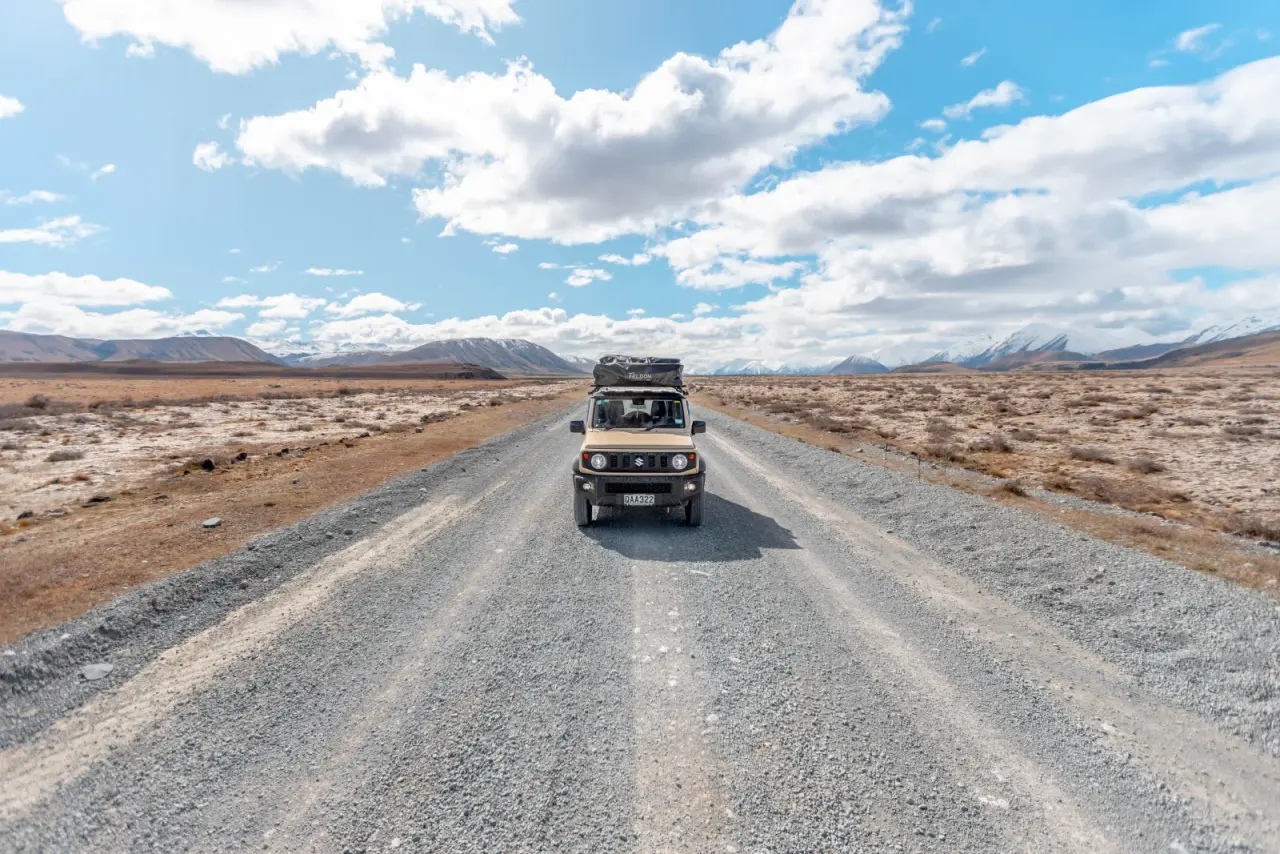
NZ roads are often narrow and winding. A big van catches more wind and can feel heavy on the hills. Parking in towns like Queenstown or Wanaka is easier in a car. A small 4WD with a rooftop tent drives like a car but still lets you camp. Gravel roads to DOC camps or scenic spots are fine at a sensible speed; rental terms usually allow public gravel roads but not off-road.
Best option for couples, friends, families
For couples or two friends, a car with a rooftop tent is often the best balance: lower cost, easy to drive and park, and still a real camping trip. For families with kids, a campervan can make more sense for the extra space and indoor option. For solo travellers, either works; a car keeps things simple and cheap.
Why a small 4WD with rooftop tent can be the middle ground
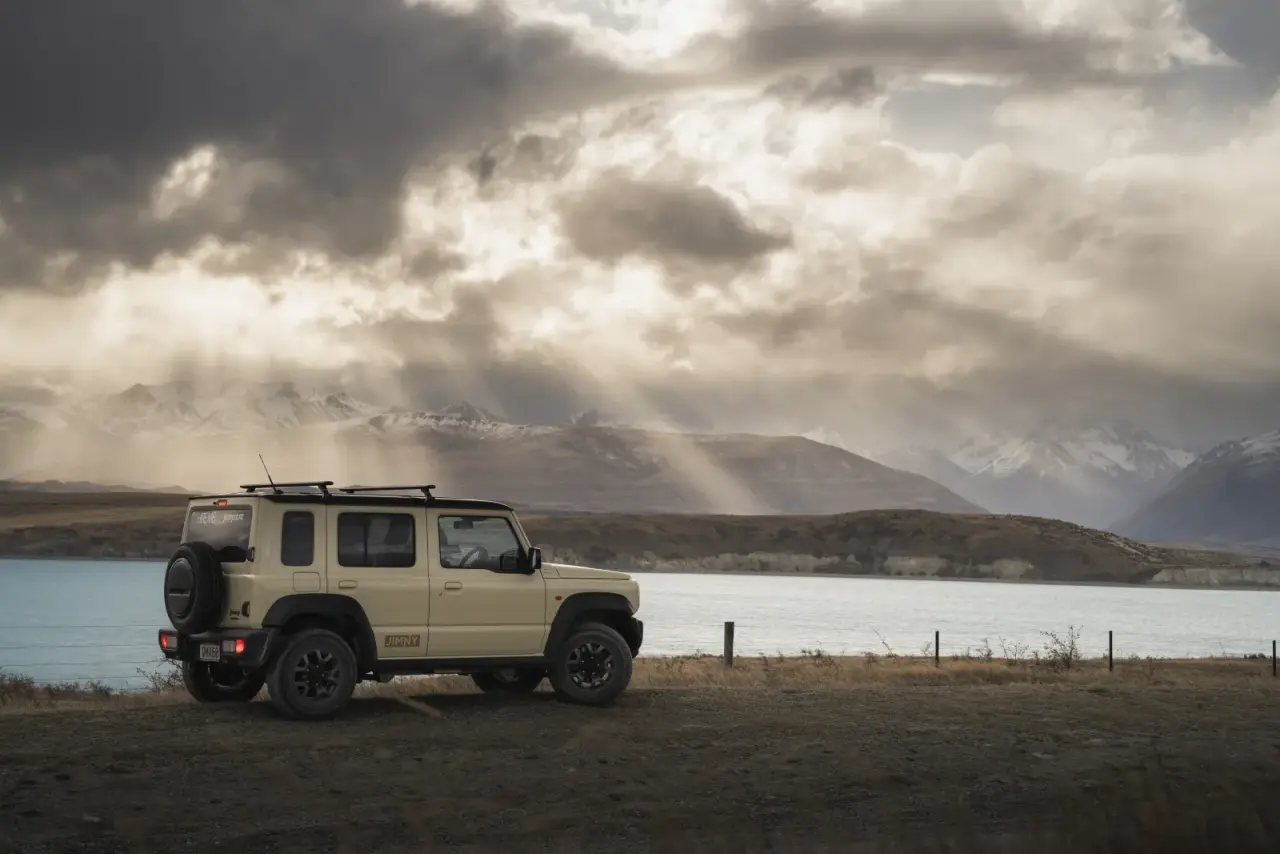
You get the freedom to camp without the size and cost of a campervan. You get a proper mattress off the ground and a quick setup. You can still use DOC camps and holiday parks. A compact 4WD like a Suzuki Jimny handles winding and gravel roads well and fits in normal car parks. If that sounds right, check our vehicles and camping pages, or use the South Island road trip planner to sketch your route.